If you’ve read our comparison of Sirimon and Chogoria, you already know the trade-off: Sirimon is the well-supported, moderate classic; Chogoria is longer, quieter, and widely considered the most scenic route on the mountain.
Here’s the good news -you don’t actually have to choose. The Sirimon-Chogoria traverse combines both: climbing up via one route and descending via the other, so you get the benefits of each without walking the same trail twice. For trekkers with 6 days to spare, this is very often the single best way to experience Mt. Kenya, and it’s the itinerary we recommend most often when someone asks us, honestly, “what would you do?”
How the Traverse Works
There are two directions you can run this itinerary:
Sirimon up, Chogoria down (the more common choice) You ascend via Sirimon’s moderate, well-graded trail -a sensible way to gain altitude steadily with strong logistical support -then descend via Chogoria, passing through the Gorges Valley and Lake Michaelson on your way down. This means you experience Chogoria’s dramatic scenery at a point in the trip when you’re already well acclimatized, which makes the descent more enjoyable and considerably less strenuous than it would be as part of an ascent.
Chogoria up, Sirimon down Less common, but a legitimate alternative if you specifically want Chogoria’s superior acclimatization profile working in your favor on the way up, particularly if this is your first time at altitude. You then descend via Sirimon’s more direct trail, which can mean a slightly faster finish to the trek.
Most trekkers -and most of our guides -recommend the first option: Sirimon up, Chogoria down.
A Typical 6-Day Traverse Itinerary
Day 1: Sirimon Gate to Old Moses Camp A gentle start through forest and into moorland, with wide early views of the peaks -a good introduction to the altitude ahead.
Day 2: Old Moses to Shipton’s Camp A longer day gaining meaningful altitude, moving deeper into the alpine zone below the peaks.
Day 3: Acclimatization and short exploration around Shipton’s Many traverse itineraries build in a lighter day here -short exploratory walks at altitude, resting before summit night.
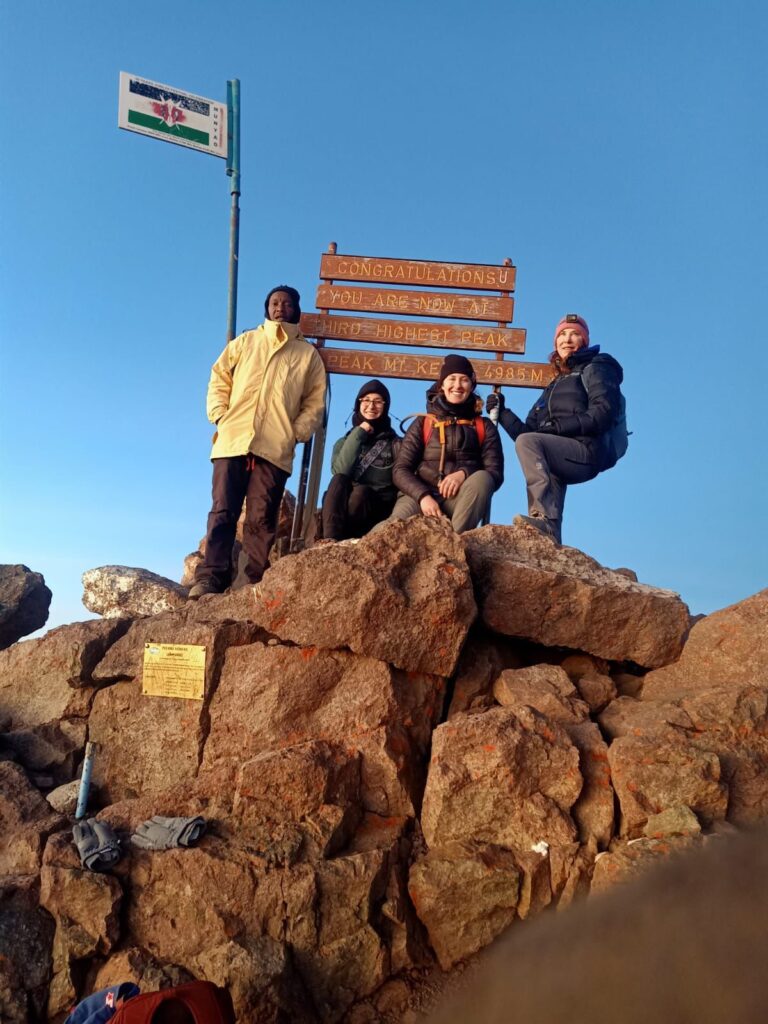
Day 4: Summit day -Point Lenana, then descend toward Chogoria side An early-hours push to the summit (4,985m), timed for sunrise. After summiting, you begin your descent, now heading toward the Chogoria side of the mountain rather than retracing your ascent.
Day 5: Descent through the Gorges Valley and Lake Michaelson This is the standout day of the traverse -the descent takes you directly through Chogoria’s most dramatic scenery, at a point in the trip when your body is already acclimatized and the walking feels considerably easier than it would on the way up.
Day 6: Final descent to Chogoria Gate A long final descent back through moorland and forest, finishing at Chogoria Gate rather than where you started -a genuinely different mountain experience from the one you began.
Why We Recommend This Over a Single Route
You get Chogoria’s scenery without adding it as extra ascent effort. Climbing Chogoria’s dramatic sections uphill, at altitude, is a real physical undertaking. Descending through them, already acclimatized, is a completely different experience -you can actually look around and enjoy it rather than focusing purely on the next step.
Sirimon’s gentler early gradient still does its job. You still benefit from Sirimon’s sensible, moderate acclimatization curve on the way up, which is a real advantage if you’re newer to high-altitude trekking.
You never walk the same trail twice. Every day of the trek shows you new terrain -a genuinely different experience from an out-and-back itinerary on a single route.
It’s a legitimately complete way to experience the mountain. Trekkers who’ve done Mt. Kenya multiple times, on multiple routes, consistently name the traverse as the version that feels the most complete -not just a route to the top, but a full crossing of the mountain’s different faces.
Who This Itinerary Is Best For
- Trekkers with 6 days available who want the most complete Mt. Kenya experience
- Anyone who read our Sirimon vs. Chogoria comparison and genuinely couldn’t choose
- Trekkers who’ve done a shorter route before and want a deeper, more varied version this time
- Photographers and scenery-focused trekkers who don’t want to compromise between “well-supported” and “spectacular”
It’s a slightly longer commitment than a single-route climb, and it costs a bit more given the extra day -but for most trekkers with the time to spare, it’s genuinely worth it.
Climb the Traverse with Dun Travel Safaris
We’ve been guiding Mt. Kenya for over 20 years, across every major route on the mountain, and the Sirimon-Chogoria traverse remains one of our favorite itineraries to lead -it’s simply the best version of this mountain we know how to show someone.
View our Mt. Kenya trekking packages →
Curious whether the traverse fits your fitness level and schedule? Chat with us directly on WhatsApp -we’ll help you plan it properly before you book.
Frequently Asked Questions
How many days does the Sirimon-Chogoria traverse take? Typically 6 days, one day longer than a standard single-route Sirimon or Chogoria climb, to account for the additional distance covered.
Is the traverse harder than climbing a single route? Not necessarily harder, but longer overall in distance. Because you’re already acclimatized by the descent, the Chogoria side often feels more manageable than climbing it directly would.
Which direction is better: Sirimon up or Chogoria up? Most trekkers and guides recommend ascending via Sirimon and descending via Chogoria, since it pairs a moderate ascent with a spectacular, easier-feeling descent.
Is the traverse suitable for first-time high-altitude trekkers? Yes, with proper preparation and a licensed guide -the extra acclimatization built into 6 days makes it a genuinely sound choice for first-timers, not just experienced climbers.
How much does the Sirimon-Chogoria traverse cost? Pricing is generally close to a standard 5–6 day single-route climb, with a modest increase for the additional day. See our current Mt. Kenya trip pricing here.