Last updated: September 7, 2026. This is an active, developing situation – details below reflect the most recent confirmed reports, and we’ll update this post as the picture becomes clearer.
A wildfire has been burning on Mount Kenya since September 1, 2026, and as of the most recent update from the Mount Kenya Trust, firefighting teams have been battling it for five straight days with limited containment so far. Here’s what’s actually confirmed, what it means if you have an upcoming trek, and where to get verified updates as the situation develops.
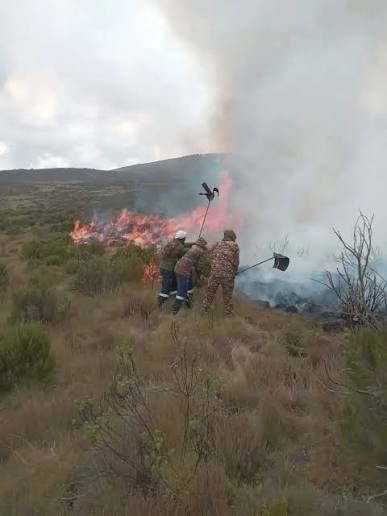
What We Know So Far
According to a statement from the Mount Kenya Trust dated September 5, 2026, the fire broke out on the eastern flank of Kibiaranyeki and has been difficult to contain due to persistent high winds. The Trust reported as many as 17 separate fire points visible at once over the course of the response.
The fire has since spread beyond its original location. Per the Trust’s update, flames moved south and west from Rutundu toward Lake Alice and Lake Ellis, and at points crossed the Kathita Gorge as high winds repeatedly reignited areas that had been brought under control earlier in the day. This puts the fire in the general vicinity of the mountain’s northeastern moorland zone – an area near sections of the Chogoria route – though we do not have official confirmation of any specific trail or route closures at this time, and we’d urge caution against assuming normal access until KWS confirms otherwise.
As of this writing, the cause of the fire has not been publicly confirmed.
Who’s Responding
This has become a genuinely large, coordinated response. Per the Mount Kenya Trust’s statement, the following organizations have contributed personnel, aerial support, or resources to the firefighting effort:
- Kenya Wildlife Service (KWS)
- Kenya Forest Service (KFS)
- Lewa Wildlife Conservancy
- Rhino Ark
- Borana Conservancy
- Kisima
- Local Community Forest Associations
- Tropic Air
- The Mountain Club of Kenya
- Tropical Heat
- Galana Energies
The scale of this response reflects both the seriousness of the fire and how seriously Kenya’s conservation community treats Mount Kenya – a UNESCO World Heritage Site and one of the country’s most critical water towers, feeding the Tana and Ewaso Ng’iro river systems that millions of Kenyans depend on.
Is This Unusual for Mount Kenya?
Not entirely, unfortunately. Fires on Mount Kenya tend to occur during dry spells, and the mountain has seen serious wildfire events in past years as well, including a significant outbreak reported by UNESCO’s World Heritage Centre in prior dry seasons. What varies year to year is severity – some years see minimal burning, others see large, hard-to-contain fires like the one currently underway. High winds, as reported in this case, are consistently the biggest factor in how quickly a fire spreads and how hard it is to bring under control.
What This Means If You Have an Upcoming Trek
We want to be straightforward here rather than speculate: we do not yet have official confirmation from KWS on whether specific trekking routes, gates, or campsites are affected or closed. Given the location described – near Rutundu, Lake Ellis, and the Kathita Gorge – travelers with treks planned on the Chogoria side in the near term should treat this as a genuine reason to check directly before assuming normal access. If your itinerary is on the Sirimon or Naro Moru side, or if you’re planning a technical climb to Nelion or Batian, the same caution applies until routes are confirmed clear.
If you have a trek booked with us in the coming weeks:
- We are actively monitoring official KWS and Mount Kenya Trust updates and will contact you directly if your route or dates are affected.
- Reach out to us directly if you have any concerns about an upcoming booking – we’d rather confirm current conditions with you than have you find out something unexpected at the gate.
- Don’t rely on older blog posts or general route guides for current conditions – this is a live situation, and anything published before September 2026 won’t reflect it.
How to Get Verified Updates
For the most current, on-the-ground information, the Mount Kenya Trust’s official channels are the most reliable source right now, since they’re directly involved in the response and posting regular updates. We’d recommend checking there directly rather than relying on secondhand social media posts, which can spread outdated or exaggerated information during a fast-moving event like this.
Our Commitment
Mount Kenya is one of the destinations at the heart of what we do, and the ecosystem our guides, porters, and local communities depend on. We’re following this situation closely and will update this post, and contact affected travelers directly, as the picture becomes clearer.
If you have any questions about an upcoming trek, get in touch with our team and we’ll give you the most current information we have. You can also see our full range of Kenya trips or learn more about Dun Travel Safaris if you’re planning ahead and want to discuss timing around this.