If Sirimon and Chogoria are the “classic” ways up Mt. Kenya, Naro Moru is the shortcut. It’s the most direct route to Point Lenana, which makes it the fastest – but that speed comes with real trade-offs worth understanding before you book.
Here’s what the Naro Moru route actually involves, who it suits, and why “fastest” doesn’t automatically mean “easiest.”
Naro Moru at a Glance
| Naro Moru Route | |
| Typical duration | 3–4 days |
| Starting point | Naro Moru town (west side, near Nanyuki) |
| Difficulty | Moderate to challenging – steep, compressed acclimatization |
| Scenery | Forest, the infamous “Vertical Bog,” open moorland |
| Crowds | Moderate – less busy than Sirimon, more than Chogoria |
| Acclimatization profile | The most compressed of the main routes – higher altitude sickness risk |
| Best for | Time-limited, fit trekkers comfortable with a faster ascent |
| Known for | Being the shortest, most direct path to Point Lenana |
Why Naro Moru Is Faster
Unlike Sirimon and Chogoria, which approach the summit gradually from the west and east respectively, Naro Moru climbs almost straight up the mountain’s western flank. There’s less lateral distance to cover, which is exactly why it’s popular with trekkers who are short on time or already well-acclimatized to altitude from previous climbs.
In practical terms: where Sirimon typically takes 4–5 days and Chogoria 5–6, Naro Moru can get you to Point Lenana and back in as little as 3–4 days.
What to Expect on the Trail
Day 1–2: Forest to the “Vertical Bog” The route starts in dense montane forest before climbing into open moorland. The section trekkers remember most – for better or worse – is the “Vertical Bog,” a steep, often waterlogged stretch that gains altitude quickly. It’s muddy, occasionally slippery, and a good preview of the pace this route demands.
Day 2–3: Teleki Valley to Mackinder’s Camp Above the bog, the trail opens into the Teleki Valley, with clear views of the peaks ahead. Most itineraries base at Mackinder’s Camp before a pre-dawn push to Point Lenana on summit day.
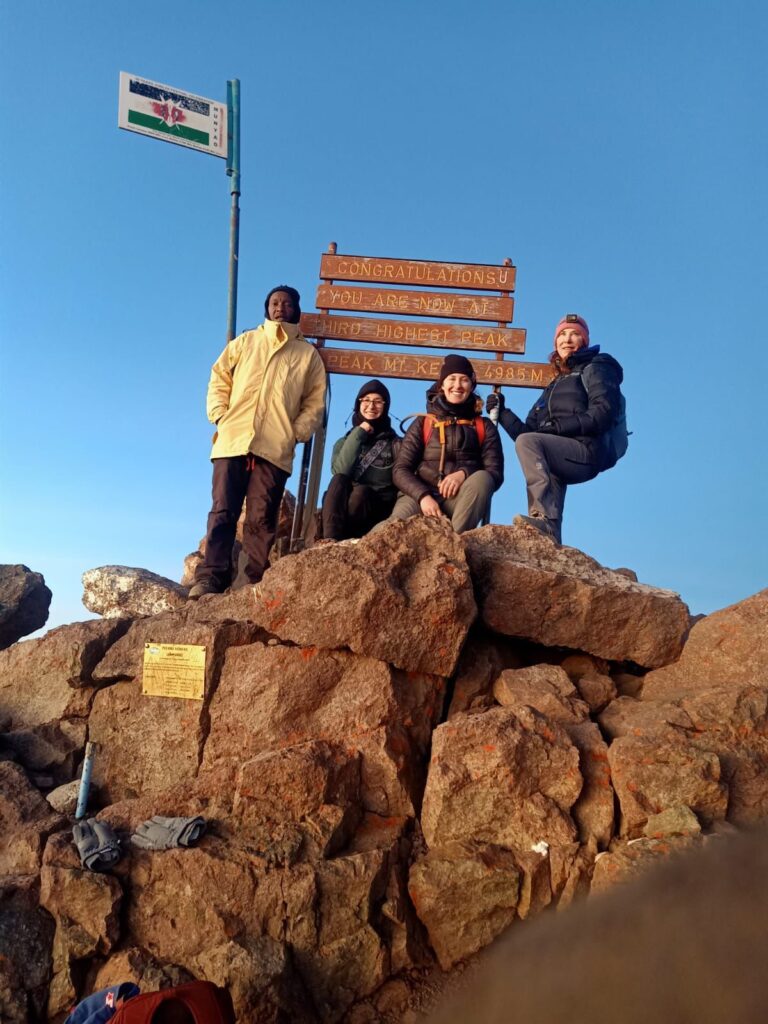
Summit day As with every Mt. Kenya route, the final push to Point Lenana starts in the early hours of the morning, in the cold, to reach the summit around sunrise – widely considered the best time to be there, both for light and for stable weather.
The Trade-Off: Speed vs. Acclimatization
This is the single most important thing to understand before choosing Naro Moru.
Altitude sickness happens when your body doesn’t have enough time to adjust to lower oxygen levels – and time is exactly what the Naro Moru route compresses. Climbing the same net altitude in 3–4 days instead of 5–6 gives your body meaningfully less opportunity to acclimatize, which is why Naro Moru has a higher reported rate of altitude-related symptoms than Sirimon or Chogoria.
That doesn’t mean it’s unsafe – thousands of trekkers summit via Naro Moru every year. It means it’s better suited to:
- Trekkers who are already reasonably acclimatized (e.g., arriving from another high-altitude trip)
- Fit, experienced hikers comfortable with a faster, more demanding pace
- Climbers genuinely constrained on time, who understand and accept the higher difficulty trade-off
If this is your first time above 3,000m, we generally recommend Sirimon or Chogoria over Naro Moru – the extra day or two meaningfully improves your comfort and summit success rate.
Naro Moru vs. Sirimon vs. Chogoria: The Short Version
- Naro Moru – fastest, steepest, best for time-limited or already-acclimatized trekkers
- Sirimon – moderate, well-supported, the standard first-timer route
- Chogoria – longest, most scenic, best natural acclimatization
If you’re choosing purely on speed, Naro Moru wins. If you’re choosing on comfort and safety margin, it’s usually the third choice behind the other two.
What to Pack for Naro Moru
Because of the compressed schedule and the notorious Vertical Bog section, a few things matter more here than on the other routes:
- Waterproof, ankle-supporting boots – the bog section is genuinely muddy, not just damp
- Gaiters, if you have them – they make a real difference on this specific route
- Layered clothing for rapid temperature swings, since you’ll move through multiple climate zones faster than on longer routes
- A personal altitude plan discussed with your guide in advance, given the compressed acclimatization window
Climb Naro Moru with Dun Travel Safaris
Naro Moru rewards preparation more than any other Mt. Kenya route – the pace doesn’t leave much room for surprises. Our guides have led trekkers up all three main routes for over 20 years and can help you honestly assess whether Naro Moru fits your fitness level and timeline, or whether Sirimon or Chogoria would set you up for a more comfortable summit.
View our Mt. Kenya trekking packages →
Not sure which route is right for you? Chat with us directly on WhatsApp – we’ll talk it through before you book anything.
Frequently Asked Questions
Is Naro Moru the fastest route up Mt. Kenya? Yes. It’s the most direct path to Point Lenana, typically completed in 3–4 days versus 4–6 for Sirimon or Chogoria.
Is Naro Moru harder than Sirimon or Chogoria? It’s shorter but steeper, with a more compressed acclimatization schedule – which generally makes it more physically demanding and carries a higher risk of altitude sickness for first-timers.
What is the “Vertical Bog” on the Naro Moru route? A steep, often muddy section of trail in the moorland zone known for gaining altitude quickly. It’s one of the most talked-about parts of this specific route.
Is Naro Moru suitable for beginners? It can be, but it’s generally better suited to trekkers with some prior high-altitude experience or those who are already acclimatized. First-timers are often better served by Sirimon or Chogoria.
Can I combine Naro Moru with another route? Yes – some trekkers ascend via Naro Moru and descend via Sirimon or Chogoria to shorten the climb while still getting a different, more gradual way down.
How much does the Naro Moru route cost? Pricing depends on trip length, group size, and season. See our current Mt. Kenya trip pricing here.