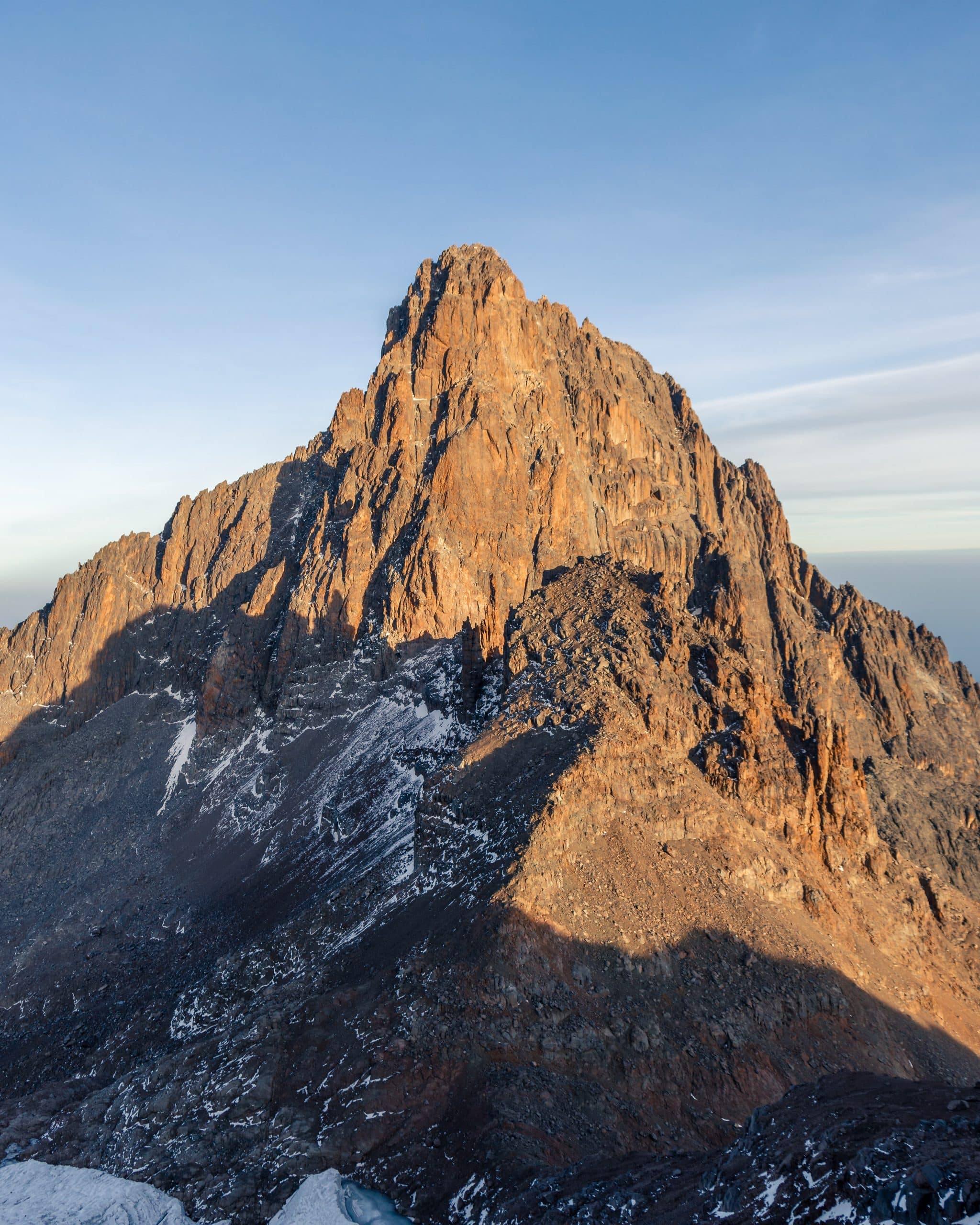
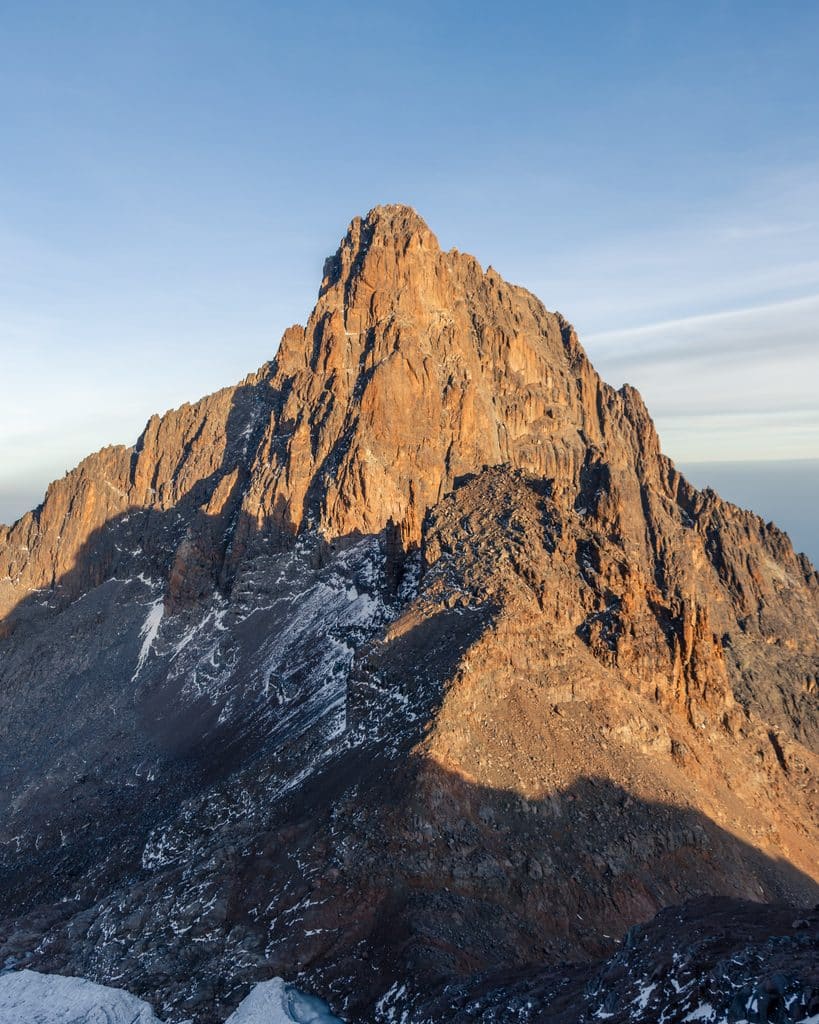
Short answer: it depends entirely on which “Mt. Kenya” you’re climbing. Trek to Point Lenana (4,985m) and you’re looking at a challenging but achievable high-altitude hike, well within reach of a reasonably fit beginner. Aim for Nelion (5,188m) or Batian (5,199m), the mountain’s true summits, and you’re now talking technical rock and ice climbing that requires real mountaineering experience.
Most people asking “is Mt. Kenya hard?” mean the first version – the trekking route to Point Lenana. This guide breaks down exactly how hard that is, what makes it difficult, and how it compares to Kilimanjaro, so you can judge honestly whether you’re ready.
The Two Very Different Versions of “Climbing Mt. Kenya”
Mt. Kenya has three peaks, and they are not remotely comparable in difficulty:
- Point Lenana (4,985m) – a non-technical trekking summit reachable by anyone with reasonable fitness, proper acclimatization, and good boots. No ropes or climbing skills required.
- Nelion (5,188m) – a technical rock climb requiring ropes, a mountaineering guide, and prior climbing experience.
- Batian (5,199m) – the true highest point of the mountain, an even more demanding technical route, typically attempted only by experienced climbers.
If you’ve seen Mt. Kenya described as “Africa’s second-highest mountain,” that’s the Batian figure – but the peak nearly everyone actually climbs is Point Lenana. This guide focuses on that trekking route, since it’s the one 95% of visitors are asking about. If you’re specifically after the technical challenge, our Technical Climb Mt Kenya itinerary is built for climbers with that experience.
Unlike Kilimanjaro’s more uniform volcanic slopes, Mt. Kenya’s routes move through several distinct zones in a single trek: montane forest, open moorland, alpine desert, and finally rocky scree near the summit. Each zone demands something different from your legs and lungs, and the final push to Point Lenana involves a steep, rocky scramble that catches some trekkers off guard if they were expecting a straightforward walk-up.
Weather can turn fast
Equatorial mountain weather is famously unpredictable. Mornings are often clear, but afternoon rain, hail, or even snow near the summit zone are common, especially outside the dry seasons. Summit attempts typically start well before dawn – partly for the sunrise views, partly to reach the top and begin descending before afternoon weather rolls in.
The final summit push is genuinely tough
Regardless of route, the last stretch to Point Lenana involves scrambling over rock in thin air, often in the cold, pre-dawn hours. It’s not technical climbing, but it is physically demanding, and tired legs combined with reduced oxygen make it feel considerably harder than the distance alone would suggest.
Mt. Kenya vs. Kilimanjaro: Which Is Harder?
This comparison comes up constantly, and the honest answer is: it depends what you mean by “hard.”
- Kilimanjaro is higher (5,895m vs. 4,985m for Point Lenana) and involves more days at extreme altitude, which is why its summit success rate is often lower for underprepared trekkers. But its trails are gentler and better maintained, with a more gradual, predictable ascent profile.
- Mt. Kenya tops out lower, but its terrain is rougher, its final summit approach is steeper and rockier, and its trails see far less foot traffic, meaning less infrastructure and a more rugged experience overall.
Many experienced trekkers describe Mt. Kenya as physically tougher per meter climbed, even though Kilimanjaro is the higher, more famous mountain. If you’re planning to attempt both, climbing Mt. Kenya first is a smart acclimatization strategy – the altitude exposure genuinely helps prepare your body for Kilimanjaro afterward.
Which Route Should You Choose?
Difficulty varies meaningfully by route, so this decision matters:
- Sirimon Route – generally considered the gentlest ascent, with a gradual gradient that supports better acclimatization. A popular choice for first-time high-altitude trekkers.
- Chogoria Route – widely regarded as the most scenic, passing the dramatic Gorges Valley and Lake Michaelson, though it’s a longer approach.
- Naro Moru Route – the most direct line to the summit, which sounds appealing but actually increases difficulty, since less distance means less time to acclimatize.
The route combination we recommend most often is ascending via Chogoria and descending via Sirimon, which balances scenery with a sensible acclimatization profile. Our 5-Day Mt Kenya Chogoria Route Down Sirimon itinerary follows exactly this pattern, and it’s the route we’d suggest for most first-time climbers weighing difficulty against experience.
Who Can Realistically Do This Trek?
You don’t need to be an athlete, but you do need to show up prepared. As a rough guide, you’re a good candidate if you can:
- Comfortably hike 5–7 hours a day on uneven terrain, for multiple consecutive days
- Handle cold, high-altitude conditions without prior serious health concerns
- Commit to a slow, deliberate pace – “walking slowly” (locally known as pole pole) is genuinely the best strategy at altitude, not a sign of weakness
- Spend at least 8–12 weeks beforehand building cardiovascular fitness and leg strength, ideally with some hiking on hilly or uneven ground
Prior mountaineering experience is not required for the Point Lenana trek. It is required for Nelion or Batian.
How to Make It Easier
A few decisions meaningfully lower the difficulty without changing the mountain itself:
- Choose a 5-day itinerary over a rushed 3-day one. Extra acclimatization time is the single most effective way to reduce altitude sickness risk and improve your chances of a comfortable summit.
- Go with an experienced local guide. Guides who know the mountain’s routes, weather patterns, and pacing requirements make a measurable difference in both safety and summit success.
- Train beforehand. You don’t need to be an elite athlete, but consistent hiking and cardio training in the months before your trip pays off directly on summit day.
- Travel in the dry season. Clearer trails and more predictable weather reduce the physical toll of the trek considerably.
Final Verdict: Is Mt. Kenya Hard to Climb?
For Point Lenana: yes, it’s a real physical challenge, but it’s absolutely achievable for a reasonably fit trekker with the right preparation, pacing, and guide. It is not a mountaineering expedition. For Nelion or Batian: yes, genuinely hard, and only suitable for climbers with technical experience.
If you’re weighing your options or want a route recommendation tailored to your fitness level and timeframe, get in touch with our team – we’ll help you choose the right itinerary for the mountain and the challenge you’re actually looking for.